


Healthy hooves are the foundation of a sound horse, and frog health plays a critical role in overall hoof function. This article explains what causes horse thrush, how moisture and environment contribute to this common hoof infection, and why consistent hoof care and thrush prevention are essential. Learn how to recognize early signs of thrush in horses and support long-term horse hoof health with a preventative approach using Coat Defense® Thrush Coat.

Thrush Coat: Protecting the Foundation of Your Horse
No hoof, no horse.
You’ve heard it before. It’s more than a saying. Healthy hooves are the foundation of a sound horse, and one small but powerful structure plays a major role: the frog.
Why the Frog Matters
The frog isn’t just filler. It supports the whole horse by providing:
-
Shock absorption
-
Blood circulation within the hoof
-
Traction and stability
When the frog is compromised, the effects don’t stay local. Frog health directly impacts overall soundness and comfort.
What Is Thrush?
Thrush is one of the most common hoof conditions horses face.
Thrush is:
-
A bacterial (and sometimes fungal) infection
-
Found in the frog and surrounding grooves (sulci)
-
Fueled by moisture and low-oxygen environments
Common signs include:
-
Strong, unpleasant odor
-
Black or dark discharge
-
A soft, deteriorating frog
Left untreated, thrush can move beyond surface tissue and lead to pain or lameness.
Why Thrush Happens (Even to Good Horse Owners)
Thrush is not a reflection of poor horsemanship. It can happen to any horse.
Common contributing factors:
-
Wet or muddy paddocks
-
Soiled or damp stall bedding
-
Rainy seasons or winter conditions
-
Limited turnout or movement
-
Deep frog clefts that trap moisture and debris
Even well-maintained horses can develop thrush when conditions are right. That’s why prevention and early intervention are essential.
Your First Line of Defense
Consistent hoof care makes a difference.
-
Pick hooves daily to remove packed debris
-
Watch for early changes in frog health
-
Maintain proper hoof balance with regular farrier care
-
Keep hooves as clean and dry as possible
Why Coat Defense® Thrush Coat Is So Effective
(And a Better Choice Than Typical Copper Sulfate Remedies)
Many traditional thrush treatments rely on harsh ingredients like copper sulfate. While these can kill bacteria, they often do so by destroying healthy frog tissue along with the infection.
Coat Defense® Thrush Coat takes a different, hoof-friendly approach.
What makes it effective:
-
Absorbs excess moisture that thrush needs to survive
-
Coats and protects the frog and sulci
-
Creates an environment where thrush can't thrive or survive
Unlike caustic treatments, Thrush Coat:
-
Does not burn or damage healthy tissue
-
Supports the hoof’s natural healing process
-
Can be used consistently without concern
Safe for you, safe for your horse:
-
No staining on hands, tools, or barn floors
-
No harsh chemicals
-
Completely non-toxic and safe for both horse and handler
By controlling moisture instead of chemically destroying tissue, Thrush Coat helps eliminate thrush without compromising long-term hoof health.
How to Apply Thrush Coat

-
Clean the hoof thoroughly
-
Apply Thrush Coat directly into the frog and sulci
-
Fully coat the area. Don’t be shy
For active thrush:
-
Apply once daily
-
Continue until the frog is firm, dry, and free of odor or discharge
For prevention:
-
Apply 2 times per week
-
Increase frequency in wet or muddy conditions
The Takeaway
The frog may be easy to overlook, but its role in hoof health is undeniable. Thrush doesn’t have to be a recurring battle.
With:
-
Consistent hoof care
-
Proper environmental management
-
Preventative support like Coat Defense® Thrush Coat
You can protect the frog and support a sound, comfortable horse.
Because when it comes to hoof health, the saying still holds true: no hoof, no horse.
If you’re ready to add an easy, effective preventative step to your hoof care program, you can shop Coat Defense Thrush Coat here and support healthier hooves every day.
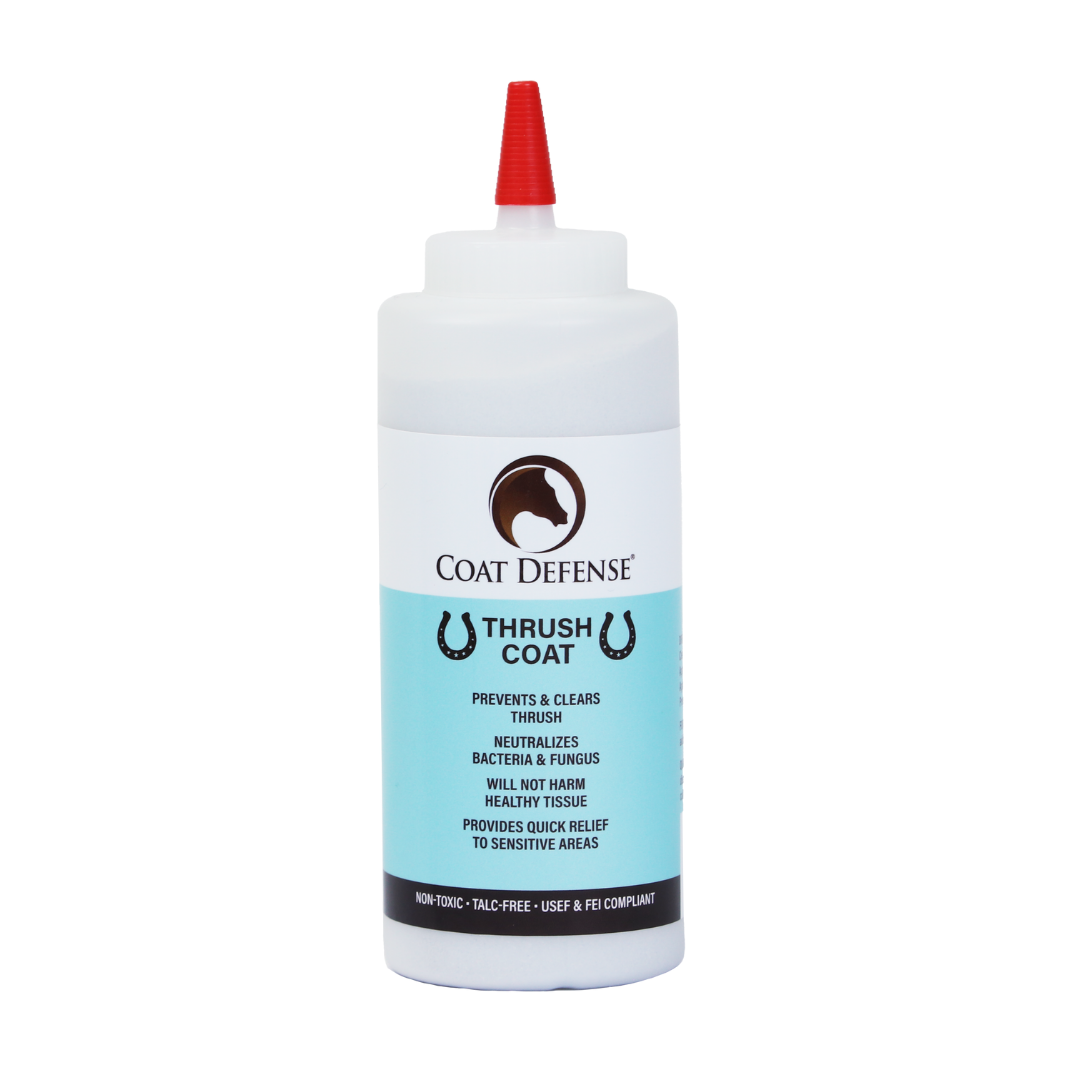
Thrush Coat
Eliminates and prevents the bacteria...
